
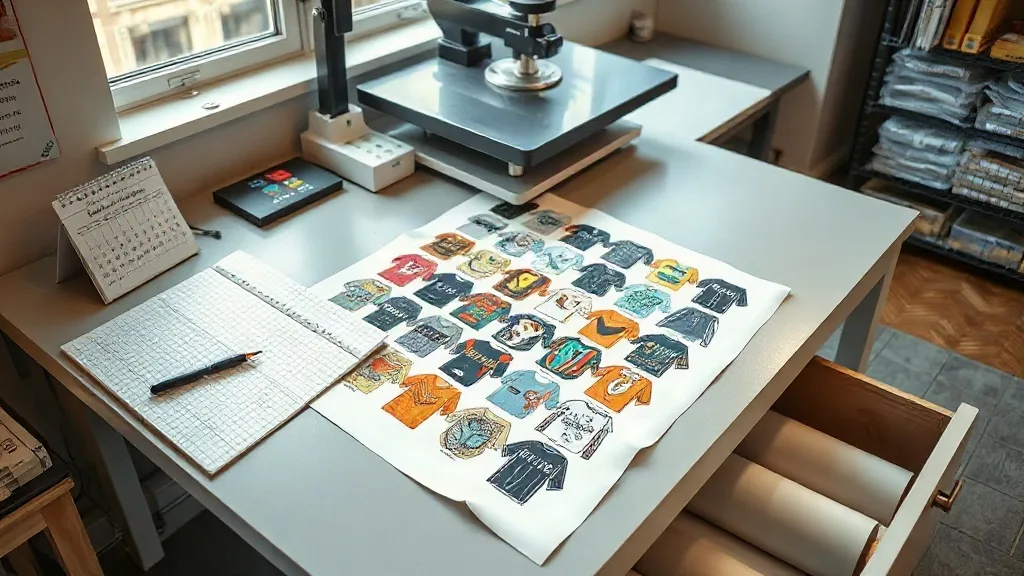
You have probably seen the pitches: fill every inch of a DTF Gangsheet and watch your cost per print plummet. That math works on paper. In the shop, though, a gangsheet is only as smart as the order behind it. If you load a sheet with designs you cannot press within the film's shelf life, or you size them for garments you have not sold yet, the savings evaporate into a drawer of unused transfers. This guide is about the ordering decisions that happen before the file ever reaches your printer.
Start With Your Press Calendar, Not Your Art Folder
The most common gangsheet mistake is building the layout around the designs you like instead of the jobs you have scheduled. Before you open your layout software, pull up your production calendar for the next two to three weeks. What is actually confirmed? Which orders have deposits? Which clients are still deciding?
Only confirmed jobs belong on a gangsheet you plan to press soon. Everything else goes on a separate sheet or waits. This one habit prevents the slow creep of "maybe" designs that turn into dead film.
A realistic ordering rhythm looks like this:
- Pull confirmed orders for the next 14 days.
- Group them by garment color and fabric type so you can press in batches.
- Identify designs that share similar press settings (temperature, pressure, peel type).
- Build one sheet per press session rather than one giant sheet for the month.
Smaller, more frequent gangsheets cost slightly more per inch but almost always save money overall because you are not holding film you may never use.
Match Sheet Size to Your Press, Not Just Your Budget
Gangsheet pricing usually rewards larger sheets, so there is pressure to go big. But a sheet that does not fit your press platen cleanly creates its own costs: trimming, repositioning, and wasted time. Before you commit to a size, measure your heat press platen and your transfer film rolls. A sheet that overhangs the platen by even an inch can cause uneven pressure and inconsistent adhesion on the edges.
If you run a small press, consider ordering two medium sheets instead of one large one. You will lose a little on the per-inch rate but gain flexibility. You can press one sheet this week and hold the other for a job that lands next week, without exposing both to the same storage conditions.
Also think about how you will handle the sheet in the shop. A sheet that is too large to lay flat on your worktable will get curled, creased, or stored upright against a wall. Film that is not stored flat tends to pick up dust and static, which shows up as pinholes in the final print.
Design Sizing: The Quiet Profit Killer
Most gangsheet calculators focus on how tightly you can nest designs. That is important, but sizing decisions matter just as much. A design sized for a men's large chest print will not work on a youth small, and if you size everything to the largest garment in the order, you are paying for film you cannot use.
Before nesting, list every garment size in the order and the intended print dimensions for each. Then decide whether to scale designs individually or standardize on two or three sizes. Standardizing reduces layout time and makes pressing more predictable, but it can leave you with transfers that are slightly too large for the smallest garments.
A practical middle ground: standardize on two sizes per design (adult and youth) and nest them separately. This keeps the layout simple while avoiding the waste of pressing an adult-sized transfer onto a toddler tee.
Mixed Orders: When One Sheet Makes Sense and When It Does Not
Mixed orders are where gangsheets shine, but only if the designs share press settings. If one design requires a low-temperature press for a heat-sensitive fabric and another needs a high-temperature press for cotton, putting them on the same sheet forces you to compromise. You will either under-press the cotton or over-press the sensitive fabric.
Group designs by press profile first, then by color. Designs that press at the same temperature and pressure can share a sheet even if they are for different clients. Designs that need different settings should be separated, even if it means paying for a second sheet.
Here is a simple sorting rule that works for most shops:
- Sort all confirmed designs by press temperature.
- Within each temperature group, sort by garment color (light versus dark) because dark garments often need a white underbase layer that affects film thickness.
- Within each color group, nest by size to minimize gaps.
This three-step sort takes about ten minutes and consistently produces cleaner layouts than nesting by design type or client.
Storage and Shelf Life: The Part Nobody Plans For
DTF film has a shelf life. It is not infinite, and it is sensitive to humidity, heat, and light. If you order a gangsheet for a job that might happen next month, you are gambling on storage conditions you may not control.
In a typical shop, film stored in a sealed bag in a cool, dark drawer stays usable for several weeks. Film left on a workbench near a window or a heat press degrades much faster. Before you order a large sheet, ask yourself where it will live until you press it. If the answer is "on the shelf above the press," order smaller.
A good habit is to label each sheet with the order date and the intended press date. Anything not pressed within two weeks gets moved to the front of the queue or reconsidered. This simple label turns a passive inventory into an active schedule.
When to Reorder and When to Wait
Reordering is not just about running low on film. It is about matching your order cycle to your sales cycle. If you sell mostly through preorders, you can order gangsheets after the preorder window closes, which means you know exactly what you need. If you sell at markets or pop-ups, you may need to hold a small buffer of common designs.
A practical approach for most small shops: keep a buffer gangsheet of your top three to five designs in the most common sizes, and order job-specific sheets for everything else. The buffer sheet covers walk-in requests and small reprints; the job sheets keep your costs tied to actual revenue.
Review your buffer sheet monthly. If a design has not moved in two months, it does not belong in the buffer. Replace it with something that has.
Frequently Asked Questions
How many designs can I fit on a DTF Gangsheet?
There is no fixed number because it depends on design size and nesting efficiency. A sheet that fits twelve adult chest prints might fit forty small logo prints. The better question is how many designs you can press within your film's usable window. If you cannot press them within two to three weeks, the sheet is too large for your workflow.
Can I mix different fabric types on the same gangsheet?
You can print them on the same sheet, but you should not plan to press them in the same session if they require different press settings. Group by press profile first. If a design is destined for a heat-sensitive fabric, keep it on a separate sheet from designs that need high-temperature pressing.
How should I store a gangsheet before pressing?
Keep it flat, in a sealed bag, away from direct light and heat. A cool, dark drawer works well. Avoid storing film upright against a wall or on a shelf above a heat press, as both can cause curling and dust pickup. Label the sheet with the order date so you can track how long it has been waiting.
Is it cheaper to order one large gangsheet or several small ones?
Per inch, large sheets are usually cheaper. Per pressed garment, small sheets often win because they reduce waste from unused designs and storage damage. The right choice depends on how confident you are in your upcoming orders. If your calendar is full and confirmed, a large sheet makes sense. If you are guessing, smaller sheets protect your margin.
What is the biggest ordering mistake new shops make?
Ordering for the designs they want to sell rather than the orders they have confirmed. A gangsheet is a production tool, not a catalog. Build it from your press calendar, group by press settings, and size for the actual garments in the order. That discipline is what turns a gangsheet from a bulk purchase into a profit tool.